Diving cenotes, Riviera Maya, Mexico
Cenote cavern diving in the Riviera Maya: depth and certification limits, Dos Ojos, The Pit and Angelita, 25°C water, light-beam timing, getting there.
Alex RomanUpdated 3 min read
Cenotes are sinkholes where the limestone roof of a flooded cave has collapsed and exposed the groundwater beneath. The Yucatán Peninsula has an estimated 10,000; the ones in this guide are around Tulum, on the Riviera Maya. A cenote dive is a cavern dive, not a cave dive: you follow a fixed guideline, stay within sight of daylight, go no further than 60 m into the overhead and no deeper than 21 m, and dive in groups of no more than four with a guide. An Open Water certification is enough for Dos Ojos and most other cenotes; The Pit and Angelita are the exceptions, planned to around 30 m, so operators ask for Advanced Open Water. The water is fresh, clear and around 25°C all year.
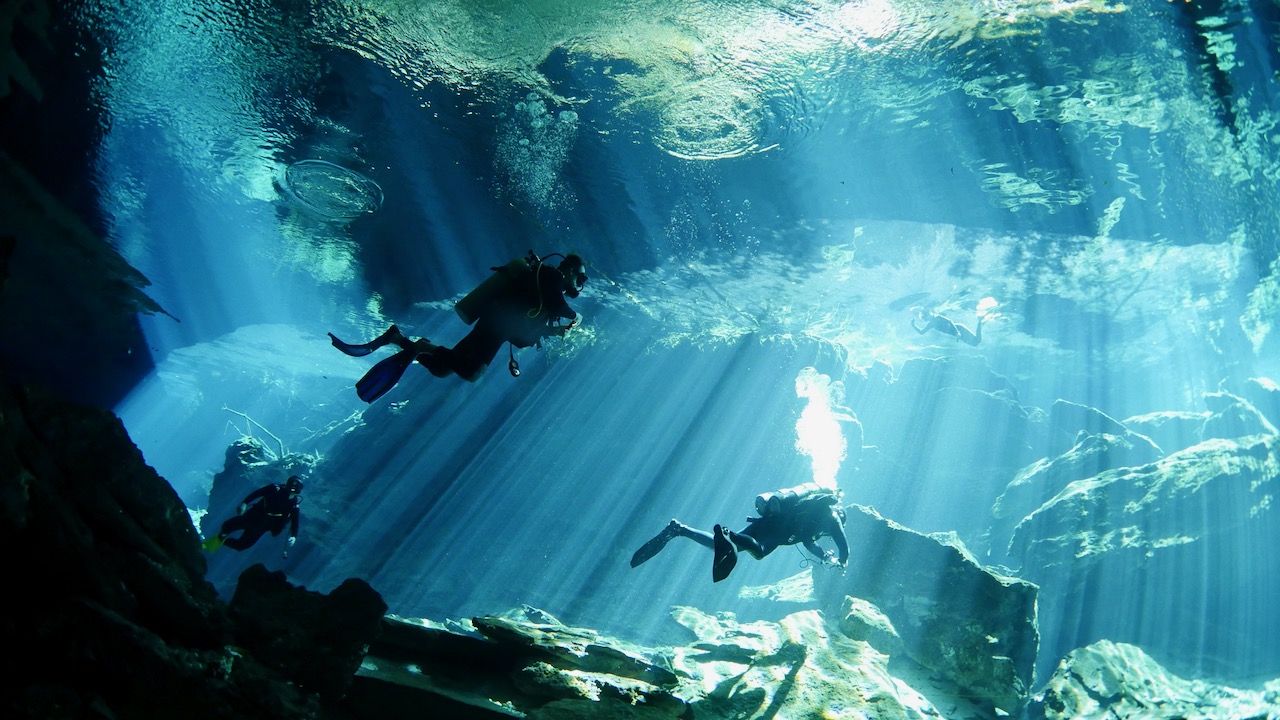
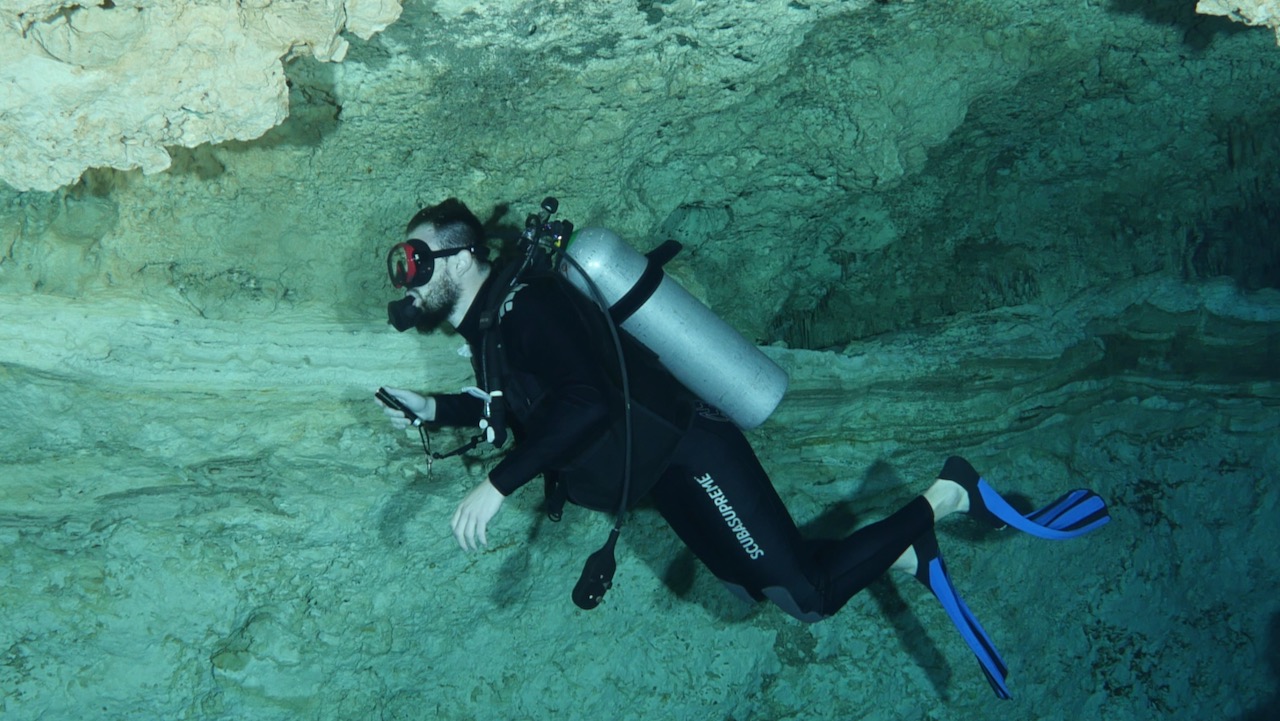
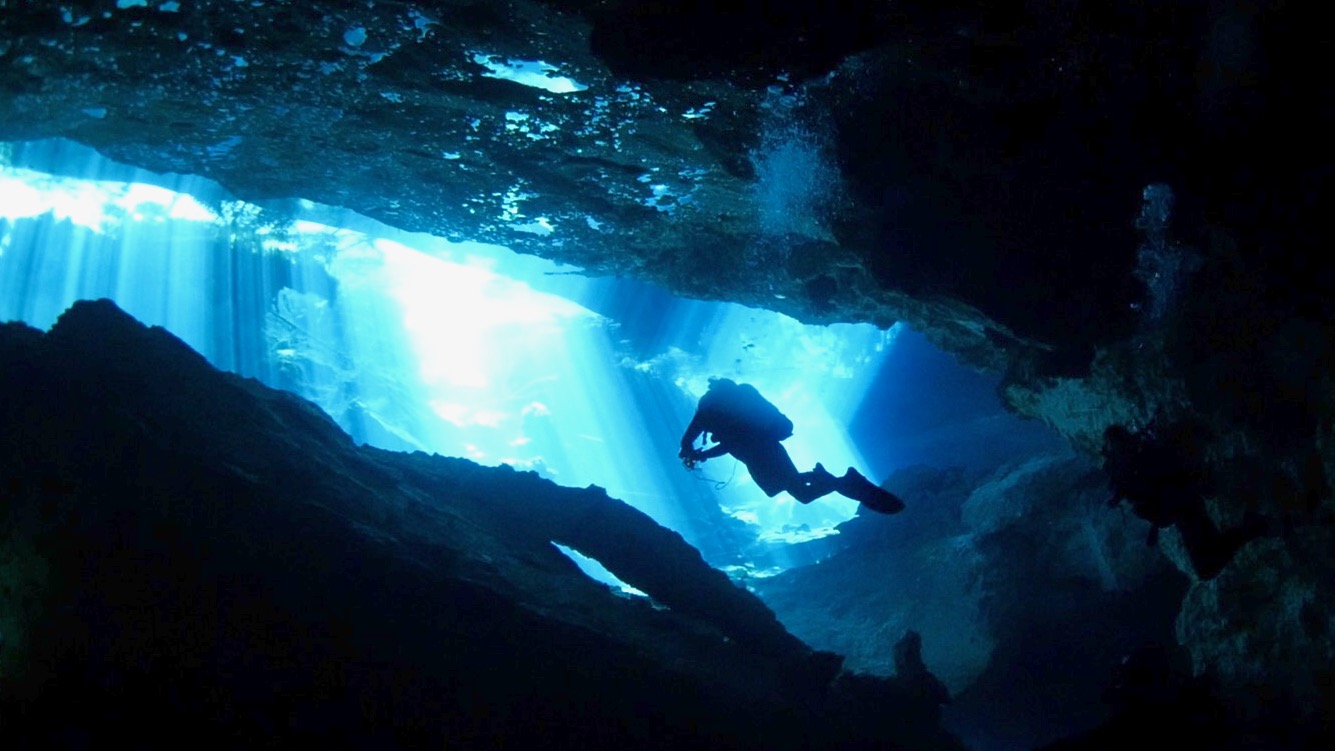
The video and gallery show divers hanging in beams of sunlight under the cavern roof, and a diver finning over pale limestone.
Cavern rules, the halocline and silt
The guide runs the dive along a permanent line. The rule of thirds applies (a third of the tank in, a third out, a third in reserve), and each diver carries a torch plus a backup. Leave the snorkel behind: tree roots and branches catch it. Wear a full-length suit and boots.
The halocline is where fresh water sits on denser salt water seeping in from the sea, 10 to 20 m below the water table near the coast; swimming through it blurs everything until you are fully in one layer. The floor is fine silt, and kicking it up severely cuts the visibility for the divers behind you. Operators check for an Open Water card, and some want 15 to 20 logged dives with good buoyancy before they take you in.
Dos Ojos, The Pit and Angelita
Dos Ojos, north of Tulum, is the shallowest of the three. It has two routes, the Barbie Line and the Bat Cave line. Maximum depth is about 10 to 14 m and each dive runs 40 to 45 minutes. In January 2018 Dos Ojos was found to connect with Sistema Sac Actun, which as of January 2023 was the second-longest underwater cave system in the world after Ox Bel Ha.
The Pit, in the same system, drops to the deepest known cave passage in Quintana Roo at 119.1 m; the dive stays far above that. Angelita, a few kilometres south of Tulum, is about 62 m deep in total and is dived only with a guide. Around 30 m you reach a layer of hydrogen sulfide a few metres thick, with fallen trees on a debris cone poking through it and clear seawater below.
Season and the best hour for the light beams
Cenote water is around 25°C year-round, so the sea sets the diving season. The dry season from late November to February is the best time for the reef; the Riviera Maya guide covers the reef and the bull sharks off Playa del Carmen. The light beams depend on the angle of the sun and the best hour differs by cenote: at Kukulcan, for example, the curtain of light forms in the morning. Ask the operator to plan the day around the light.
Getting there from Cancún and what the dive price should include
Cancún is 130 km north of Tulum and Playa del Carmen is 65 km north of Tulum, all on Highway 307. The ADO bus from Cancún airport reaches Tulum in about two hours, and Tulum has had its own airport since December 2023. Cenotes are on private or community land, so ask whether a dive price covers the entrance fee, guide, tanks, equipment, lights and transport, and check each cenote's own rules at the gate. For the rest of the region, see Mexico diving.