Fluo diving in the Maldives
Fluo diving in the Maldives: how a UV torch and a mask filter make corals glow at night, tips for filming and what the dive is like.
Alex Roman·Updated ·1 min read
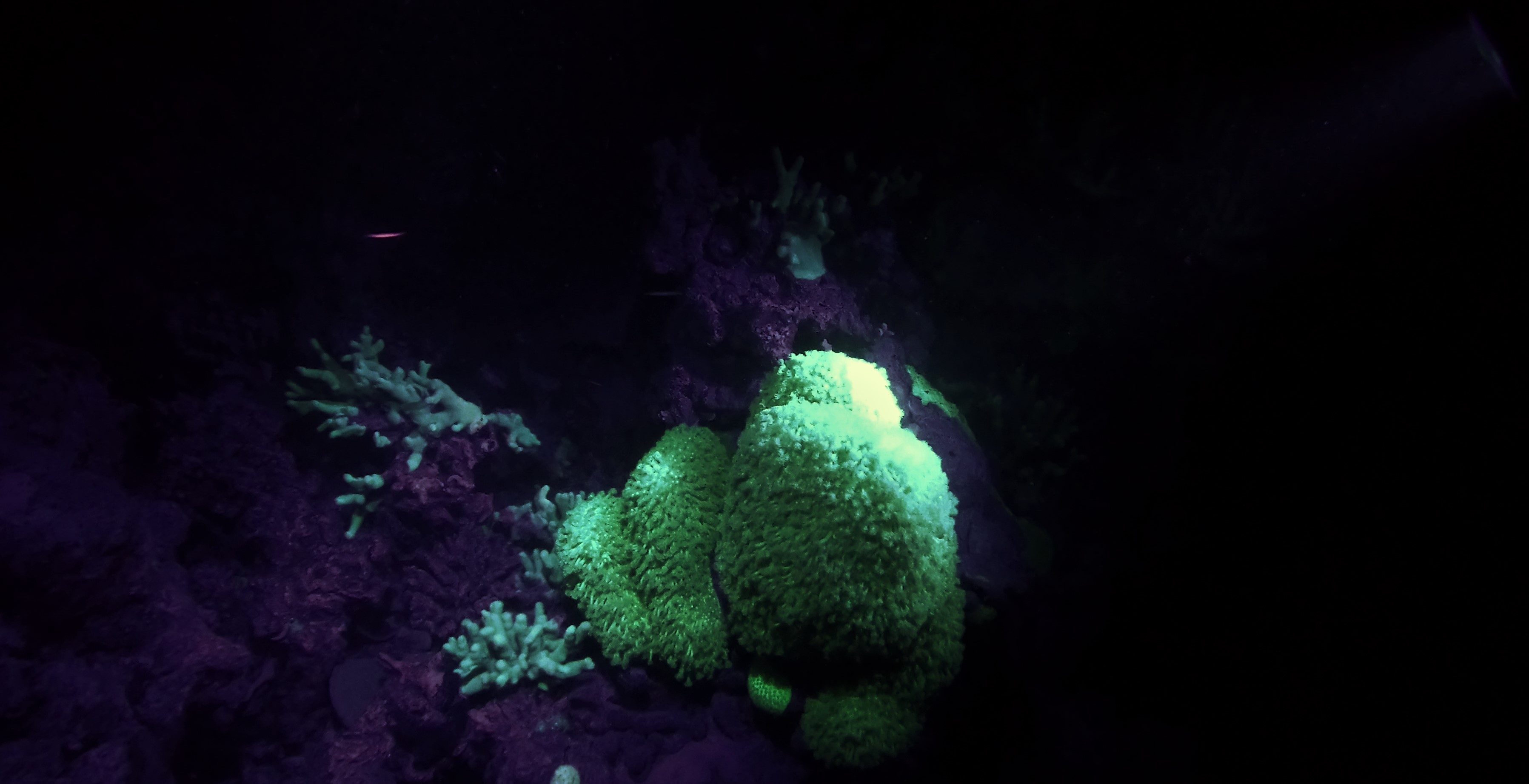
Fluo diving is short for fluorescent night dive which is a night dive with a UV torch and a yellow-orange filter over the dive mask.
How does fluo diving work?
Some marine life emit visible light when illuminated with short-wavelength blue light (the UV torch). To view this light divers need to have a filter attached to the mask that will block the blue light.
Not all corals or fish fluoresce, and the best effect can be observed from anemones, brain corals, potato corals, sponges, shrimps and some types of fish.
Can you take photos or film during the dive?
Any regular camera will work but a yellow/orange filter is needed. The typical red filter used for depth is not going to help.
My dive
The view is unexpected and alien like. The corals that received enough UV during the day will glow in neon colours (mostly green and orange).
I was amazed by the look of the anemones so I would definitely recommend looking for them.
The dive is similar to a night dive only that the UV lamp is less powerful than a regular dive torch and the visibility is much lower. I had a small claustrophobic feeling as I could only see a few metres around. The light still attracts jack fishes and sharks so I was always surrounded by sea life.
Only living coral fluoresces, so the best results are on a healthy reef after a sunny day.
DIVETIP
Check my diving experience in the following clip
What you’ll see
Fluorescence emitted by the corals, Nurse Shark, Blacktip Reef Shark.
Dive rating
★ ★ ★ ★ ☆Read more in the Maldives diving guide.
To find out more about the science behind fluo diving, read National Geographic’s profile of marine biologist David Gruber.