Travel tips
Safari in Manyara, Ngorongoro and Serengeti, Tanzania
Northern Tanzania safari in order: Lake Manyara, Ngorongoro Crater, Serengeti. Migration month by month, crater rules and fees, how to get there.
- By
- Alex Roman
- Updated
- Published
- Read time
- 4 min
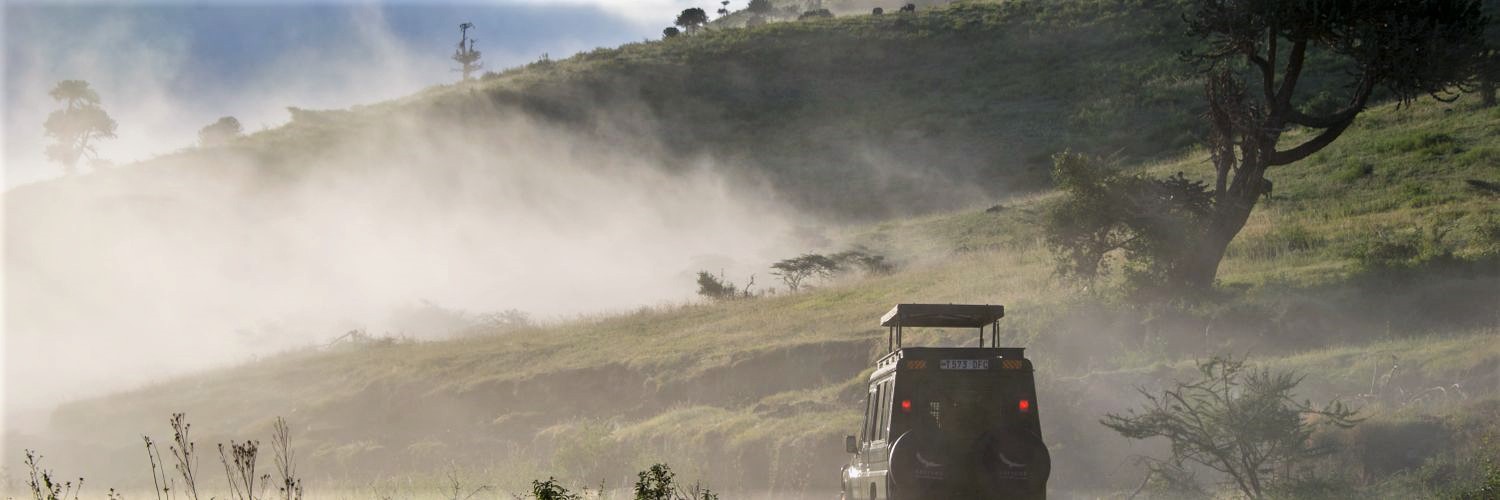
The northern Tanzania safari circuit runs west from Arusha through three parks in geographic order: Lake Manyara (126 km from Arusha, about an hour and a half), the Ngorongoro Crater (180 km) and the Serengeti beyond it. Manyara is the smallest of the three, the crater is a single descent onto a 260 km² floor that holds about 25,000 large animals, and in the Serengeti you follow the wildebeest migration, whose position depends on the month. June to October is the dry season and the easiest time to see game; January to March is calving season in the south.
The clip below is from a trip through all three parks.
Lake Manyara: groundwater forest, flamingos and tree-climbing lions
Lake Manyara National Park covers 325 km², of which about 230 km² is lake, under the wall of the Rift Valley escarpment. The road in passes through a tall groundwater forest of evergreen fig and mahogany, then opens onto the lake shore, where flocks of lesser flamingo feed in the wet season and a hippo pool sits at the northern end. The park is known for lions that rest in trees and for one of the densest baboon populations anywhere. It is busiest from July to October; November to May is greener and better for birds. A canopy walkway and night drives are offered.
Ngorongoro Crater: black rhino, descent rules and fees
The crater is a collapsed volcano 610 m deep, with a floor at about 1,800 m above sea level covering 260 km², inside the 8,292 km² Ngorongoro Conservation Area, a UNESCO World Heritage Site since 1979 where Maasai still live. The floor held 55 black rhino as of 2018, so this is the place on the circuit to look for the fifth of the big five.
Only 4x4 vehicles up to 3,500 kg tare weight may descend, a licensed or NCAA guide must accompany every visitor, driving is permitted between 06:00 and 18:00 and off-road driving is not permitted. On the NCAA tariff page in November 2026 the entry fee is USD 70.80 per non-East-African adult (16 and over) per 24 hours, plus a crater service fee of USD 295 per vehicle per trip; NCAA states that tariffs can change without notice.
Serengeti: where the migration is, month by month
Serengeti National Park covers 14,763 km² and has been a World Heritage Site since 1981. The migration is about 1.5 million wildebeest, 250,000 zebra and 400,000 to 500,000 Thomson's gazelle. The herds move clockwise, so where you should be depends on when you go:
- January to March: calving on the southern plains and in the Ngorongoro Conservation Area, with around half a million calves born. January and February are the best months for newborns.
- April to July: the herds swirl west and north after the long rains and pass through the Western Corridor, crossing the Grumeti River; June and July are the best months there.
- August and September: the northern Serengeti and the Mara River crossings.
- October and November: the return south with the short rains.
Rain falls from November to April, peaking in March and April, and the dry season runs from May to October; June to October is the easiest time to see game. The calendar above is the usual pattern, since the herds follow the rain. Seronera, in the centre, has the main airstrip, and scheduled flights connect the park's airstrips with Arusha, Kilimanjaro, Dar es Salaam and Zanzibar.
Kilimanjaro flights, flying out of the Serengeti and how park fees are charged
Kilimanjaro International Airport is the gateway, with direct flights from Amsterdam (KLM), Doha (Qatar Airways), Istanbul (Turkish Airlines), Dubai (flydubai), Paris (Air France) and Brussels (Brussels Airlines). Driving the circuit out and back doubles the road time, so one option is to drive Arusha to Manyara to Ngorongoro to Serengeti and fly out of a Serengeti airstrip, to Arusha or straight to Zanzibar for the diving at Mnemba.
Serengeti and Manyara fees are set by TANAPA (current tariffs are in its TanapaGo app) and the crater fees by NCAA, separately. NCAA permits are valid for one entry within 24 hours, so arrival and departure times decide how many days you pay for.